LE FA
Le FA, semble être d’origine nigériane (yoruba) et se pratique dans toute l’Afrique de l’ouest particulièrement au Bénin. C’est un procédé divinatoire géomantique. Il est constitué de 16 signes majeurs qui combinent les uns aux autres donnant 16 plus 240 signes soit 256. Le FA est consulté dans toutes circonstances de la vie (familiale, culturelle, socio professionnelle etc…) Il permet de déterminer le signe d’un être. Son prêtre se nomme Bokonon en langue Fon et Babalao en langue Yoruba. C’est un psychologue possédant les savoirs et les traditions ancestrales. Chaque prêtre connait également l’ésotérisme des 16 signes majeurs. L’adepte du FA se nomme FAVI (enfant de FA), le FA se détermine pour tous : hommes, femmes, enfants. Le FA, en dehors de son caractère spirituel, il a aussi des représentations physiques. The Fa originated in Nigeria among the Yoruba people and is practiced throughout west-Africa, particularly in Benin. It is a process of geomantic divination, comprised of 16 major signs that combine with 240 others to make 256 signs. The Fa answers to situations in the family, the community, and at work. It permits someone to determine their sign. The Fa Priest is known as Bokonon in Fon or Babalao in Yoruba. He is like a psychologist, but with a deep knowledge of ancestral tradition. Every priest knows the symbolic importance of each of the 16 signs. The faithful of the Fa are called Favi, meaning child of the Fa. For those faithful to the Fa, men, women, and children, the Fa determines everything. Outside of its spiritual character, it also has a physical presence.
LE FASSISSIN (Cérémonie pour avoir le FA et devenir FAVI)
Le FASSISSIN est une grande cérémonie qui consiste à faire connaitre à un individu son signe de FA, son destin ; les lois et les interdits liés à son signe. Le FASSISSIN est une ensemble de rituels qui peut aller jusqu’à trente, et dure généralement de 3 à 17 jours. Il se regroupe en sept grandes phases à savoir : FASSISSIN is a large ceremony that allows an individual to become familiar with his sign, his destiny or fate, the rules and prohibitions linked to his sign. FASSISSIN consists of a group of as many as thirty rituals and it generally lasts 3 to 17 days. There are seven principal phases as follows:
- Le FAGBASSA : C’est le lieu de la présentation des offrandes de la cérémonie et l’entrée du postulant dans le FAGBASSA (case de réflexion du FA où il doit passer une nuit entière) This is the place where offerings for the cermony are presented and the candidate enters the FAGBASSA (hut where the candidate must stay for one night reflecting on the Fa).
- Le FAKLOKLO : c’est le Lavage d’un nombre précis de graines de palmiers à huile représentant un élément important du FA This phase consists of washing the required number of palm oil seeds, each representing an important element of the FA.
-NOUHOU-HOU : c’est une série de sacrifices et d’offrandes aux différentes divinités, génies à commencer par le Ogou (Génie du Fer), le LEGBA (Dieu protecteur gardien des maisons et village) pour finir chez ALIGBO, (Génie de la route) This phase consists of a series of sacrifices and offerings to the gods and spirits, beginning with Ogou, the Spirit of Iron, LEGBA, the protective guardian of homes and villages, and finishing with the Spirit of the Road.
-Le FAKIKAN (consultation du FA) il consiste à consulter le FA pour mieux connaitre le signe de FA correspondant à la personne qui demande le FA. This consists of consulting with the FA in order to gain a better understanding of the sign of the FA that corresponds with the person asking for it.
- Le FAZOUN : c’est la cérémonie exécutée dans une forêt. Elle permet au nouveau FAVI d’aller à la rencontre de son SÊ KPOLI (son Destin) La possession du Kpoli fera du Favi un nouveau être. This ceremony takes place in a forest. It allows the new FAVI to meet his Destiny. The possession of his Destiny will make a new person of the FAVI.
-Le TOHIHI : C’est la procession qui conduira le nouveau FAVI à la rivière ou vers un marigot pour une prise de bain de purification. Le FAVI en ressort vêtu de blanc. A l’allez comme au retour le FAVI est silencieux. This is the procession that will lead the new FAVI to a river or a pond for a purifying bath. The FAVI comes out of this ritual dressed in white. From the beginning to the end the FAVI remains silent.
- AGBASSA : c’est une nouvelle consultation du FA pour mieux connaitre le SÊ KPOLI (destin) du nouveau FAVI issu de la cérémonie du FAZOUN, par l’explication de certains contes liés à son propre signe. This is a new consultation that the new FAVI has with the FA in order to get to know his destiny through the explanation of certain stories linked to his own sign.
La CHRONOLOGIE DES RITUELS DU FASSISSIN
Il convient de signaler que le FASSISSIN est une cérémonie qui ne se fait qu’une seule fois dans la vie. A cet effet, elle se pratique dans le respect scrupuleux des rituels, des chants et des danses. Le FA étant d’origine yoruba ses chants et rythmes sont souvent en langue Yoruba ou Nago. It should be said that the FASSISSIN is a ceremony that can take place only once in a lifetime. Thus it must be carried out with a scrupulous respect for the rituals, songs and dances. Since the FA is of Youruba origin, its songs and rythmes are often in the Yoruba or Nago language.
Les REGLES ET INTERDITS DU FA
Chaque divinité, religion ou autres formes de croyances disposent de ses propres principes et interdits. Il est important pour le Favi de les respecter. Au nombre de ces interdits on peut noter : ce qu’il ne faut pas manger, les couleurs d’habit à ne pas porter les lieux à ne pas aller etc… Each divinity, religion or other form of belief has its own principles and prohibitions. It is imperative for the FAVI to respect them. Some of the notable interdictions are: what must not be eaten, colors that should not be worn in clothing, places one should not go to, etc.
Le BOKONON ou le BABALAO
C’est le prêtre du FA, il est obligatoirement un homme, il doit avoir à lui son propre FA, avoir subi de nouvelles étapes d’initiation dans l’interprétation des signes du FA. Il possède la sagesse et est un exemple moral pour la société. The FA priest, who is obligatorily a man, must have his own FA sign and must have undergone new stages of initiation in the interpretation of the signs of the FA. He must be wise and serve as an example of morality for the society in which he lives.
La présente cérémonie a été réalisée chez le BABALAO AHOUANGBASSO dans la ville de Ouidah au Bénin. This ceremony has actually been performed with the BABALAO in the town of Ouidah in Benin.
Showing posts with label vodun. Show all posts
Showing posts with label vodun. Show all posts
Sunday, September 11, 2011


Tuesday, August 30, 2011
#2 - Le Kpessosso
Le KPESSOSSO est une ancienne cérémonie du peuple Gè du Togo lors de sa plus grande fête traditionnelle Vodun dénommée « EPE-EKPE ». L’histoire nous enseigne que cette cérémonie remonte aux années 1660. En effet, c’est l’ancêtre des Gè qui aurait émigré du Ghana pour s’installer dans une forêt au Togo du village d’Aneho. C’est lui qui a instauré cette fête qui consiste à aller chercher annuellement dans la forêt, une pierre sacrée (KPE) dont la couleur varie en fonction des prévisions des divinités pour chaque année. A l’entrée de la forêt sont disposés les sanctuaires des trois grandes divinités à savoir : ATA SAKUMA ; ATAKPESSOU et MAMA-KOLE. The Kpessosso is an ancient ceremony of the Gè People that takes place at Togo’s largest Vodun celebration called “Epe-Ekpe.” The story teaches us that this ceremony began around 1660 when the ancestor of the Gè left Ghana to inhabit a forest found close to the village of Aneho. He then initiated this yearly celebration at which the people search out a sacred stone (Kpe). The color of the stone to be found varies in regards to the predictions of the divinities for that year. At the entrance of the forest, there are sanctuaries of three important divinities: Ata Sakuma, Ata Kpessou, and Mama-Kole.
LES RITUELS DU KPESSOSSO
KPESSOSSO, marque l’entrée dans la nouvelle année lunaire qui durera deux à trois mois jusqu’au VODU-DJE (le retour des esprits des morts à la mer). Cette cérémonie est forte de trois grands rituels que voici : « NOLI-YOYO » qui est l’appel des esprits des morts venant de la mer, des forêts et du vent. « YAKA-WOKE », il consiste au partage populaire de repas, il peut durer plusieurs jours. « KPATCHO-TCHO » il est la danse de la divinité LANKPAN, il dure trois jours. Il convient de signaler que tous ces rituels se font sous la direction de « NI MANTCHE », grand prêtre de la forêt sacrée. KPESSOSSOU marks the beginning of the new traditional lunar year that lasts two to three months until the Vodu-Dje, the return of the spirits of the dead to the sea. This ceremony is strengthened by three important rituals: “Noli-Yoyo,” all of which call the spirits of the sea, the forests, and the wind; “Yaka-Woke,” which consists of a meal shared by the community; and “Kpatcho-Tcho,” which is the dance of the Divinity Lankpan, that lasts three days. It should be noted that all of these rituals are done under the direction of “Ni Mantche,” the head priest of the Sacred Forest.
LES ADEPTES FEMMES AU CŒUR DU KPESSOSSO
Les Adeptes femmes constituent la trame essentielle de la cérémonie de KPESSOSSO, on les retrouves à chaque étape des rituels. Elles sont chefs, adeptes et servantes de divinités. Le blanc est la couleur de leurs habits. Mais ce qui oblige et fascine le regard de tout visiteurs c’est bien sûr les colliers de perles aux couleurs multiples chatoyantes et les différents tatouages de kaolin faits sur le corps. Elles animent la cérémonie par des chants, danses et litanies. The women faithful form the essential foundation of the Kpessosso Ceremony, and they are present in every step of the ritual. They are the priestesses, followers, and servants of the divinities. White is the color of their ceremonial clothing. What really compels and fascinates those present is their colorful beaded necklaces and the Kaolin tattoos on their bodies. The enliven the ceremony with song, dance, and litanies.
LA COULEUR DE LA PIERRE SACREE CETTE ANNEE 2011
A l’instar des années précédentes, la pierre doit prendre cette année une couleur prédite par les divinités à travers l’oracle du FA. Ce sera la fonction du contenu du message s’adressant aux adeptes et à toute la communauté Gê de l’Afrique de l’oeust. En cette année 2011, la pierre a la couleur GRISE. Elle demande aux peuples Gê de faire des offrandes aux personnes en difficultés, aux mères de jumeaux, aux divinités GOU. Like previous years, the stone should have a certain color foretold by the divinities through the oracle of the Fa. This will then serve as the base of the message that is addressed to all followers of the Gê community in west-Africa. This year, 2011, the stone was gray, which instructs the people to make offerings to people in living in difficulty, to mothers of twins, and to the Gou divinities.
LA SOLIDARITE VODUN HWENDO
Comme dans toutes les religions au monde, une solidarité s’impose à ses pratiquants. C’est dans cet état d’esprit que sa majesté DAAGBO-HOUNON TOMANDJLEHOUKPON II du Bénin, chef suprême s’est rendu au Togo en tête d’une forte délégation vodun du Bénin aux côtés des Vodunssi Gê du Togo pour la célébration de cette grande messe. Like all the religions of the world, followers join together in Solidarity. Because of this spirit, the supreme priest of Vodun, Daagbo-Hounon Tomandjehounkpon II of Benin, went to Togo as the head of a large delegation of the Vodun community of Benin to be with the Vodunssi Gê of Togo for the celebration of this important feast.
LES RITUELS DU KPESSOSSO
KPESSOSSO, marque l’entrée dans la nouvelle année lunaire qui durera deux à trois mois jusqu’au VODU-DJE (le retour des esprits des morts à la mer). Cette cérémonie est forte de trois grands rituels que voici : « NOLI-YOYO » qui est l’appel des esprits des morts venant de la mer, des forêts et du vent. « YAKA-WOKE », il consiste au partage populaire de repas, il peut durer plusieurs jours. « KPATCHO-TCHO » il est la danse de la divinité LANKPAN, il dure trois jours. Il convient de signaler que tous ces rituels se font sous la direction de « NI MANTCHE », grand prêtre de la forêt sacrée. KPESSOSSOU marks the beginning of the new traditional lunar year that lasts two to three months until the Vodu-Dje, the return of the spirits of the dead to the sea. This ceremony is strengthened by three important rituals: “Noli-Yoyo,” all of which call the spirits of the sea, the forests, and the wind; “Yaka-Woke,” which consists of a meal shared by the community; and “Kpatcho-Tcho,” which is the dance of the Divinity Lankpan, that lasts three days. It should be noted that all of these rituals are done under the direction of “Ni Mantche,” the head priest of the Sacred Forest.
LES ADEPTES FEMMES AU CŒUR DU KPESSOSSO
Les Adeptes femmes constituent la trame essentielle de la cérémonie de KPESSOSSO, on les retrouves à chaque étape des rituels. Elles sont chefs, adeptes et servantes de divinités. Le blanc est la couleur de leurs habits. Mais ce qui oblige et fascine le regard de tout visiteurs c’est bien sûr les colliers de perles aux couleurs multiples chatoyantes et les différents tatouages de kaolin faits sur le corps. Elles animent la cérémonie par des chants, danses et litanies. The women faithful form the essential foundation of the Kpessosso Ceremony, and they are present in every step of the ritual. They are the priestesses, followers, and servants of the divinities. White is the color of their ceremonial clothing. What really compels and fascinates those present is their colorful beaded necklaces and the Kaolin tattoos on their bodies. The enliven the ceremony with song, dance, and litanies.
LA COULEUR DE LA PIERRE SACREE CETTE ANNEE 2011
A l’instar des années précédentes, la pierre doit prendre cette année une couleur prédite par les divinités à travers l’oracle du FA. Ce sera la fonction du contenu du message s’adressant aux adeptes et à toute la communauté Gê de l’Afrique de l’oeust. En cette année 2011, la pierre a la couleur GRISE. Elle demande aux peuples Gê de faire des offrandes aux personnes en difficultés, aux mères de jumeaux, aux divinités GOU. Like previous years, the stone should have a certain color foretold by the divinities through the oracle of the Fa. This will then serve as the base of the message that is addressed to all followers of the Gê community in west-Africa. This year, 2011, the stone was gray, which instructs the people to make offerings to people in living in difficulty, to mothers of twins, and to the Gou divinities.
LA SOLIDARITE VODUN HWENDO
Comme dans toutes les religions au monde, une solidarité s’impose à ses pratiquants. C’est dans cet état d’esprit que sa majesté DAAGBO-HOUNON TOMANDJLEHOUKPON II du Bénin, chef suprême s’est rendu au Togo en tête d’une forte délégation vodun du Bénin aux côtés des Vodunssi Gê du Togo pour la célébration de cette grande messe. Like all the religions of the world, followers join together in Solidarity. Because of this spirit, the supreme priest of Vodun, Daagbo-Hounon Tomandjehounkpon II of Benin, went to Togo as the head of a large delegation of the Vodun community of Benin to be with the Vodunssi Gê of Togo for the celebration of this important feast.
Ce blog est une petite partie du Grand Vodun. Contactez-nous pour plus de connaissance sur le Vodun. This blog is a little piece of a big religion. Contact us for more information.
(229) 66 74 72 52
ciamobenin@gmail.com
ciamobenin@gmail.com
Vos dons soutiendront nos recherches et la promotion d’education artistique et culturelle au Benin. Your gifts support our research and the promotion of arts education and cultural education in Benin. Visit: http://www.crowdrise.com/ArtForceAfrica.
Saturday, August 20, 2011
#1 - Le Vodun
Le Vodun est une ancienne religion présente dans la vie quotidienne des africains de l’ouest. A travers le culte des ancêtres, il est le lien entre l’esprit des morts (toujours présents parmi nous) et le monde des vivants. Religion des ancêtres éponymes, il s’exprime à travers les différents phénomènes naturels considérés en tant que force de la nature. Vodun is an ancient religion in the everyday life of west-Africans. By following the same religious practices as their ancestors, followers link the spirit of the dead (who are always among us) and the world of the living. A religion of named ancestors, it expresses itself through various natural phenomena and is considered to be the force giving power of nature.
Les Adeptes et les cérémonies Vodun Le Vodun possède une hiérarchie organisée. Il a son temple, ses adeptes, ses inities et ses servants. Les inities peuvent être des enfants comme des adultes, ils sont appelés « Vodunssi », après un passage de plusieurs mois dans un couvent et prêtent serment de ne pas témoigner des secrets enseignés ni d’abjurer leur foi en leur Vodun. Dans ce petit film, vous voyez différents vodunssi célébrant le culte de Vodun DOVO. Each Vodun is composed of a carefully planned hierarchy. It has its temple, its faithful, its initiates and its servants. Both children and adults can be initiated. They spend several months in the convent, after which they swear to keep secret the mysteries of Vudon and to always be faithful to their religion. At this point they are given the name, “Vodunssi.” In this video, you see several Vodunssi celebrating the cult of Vodun Dovo. 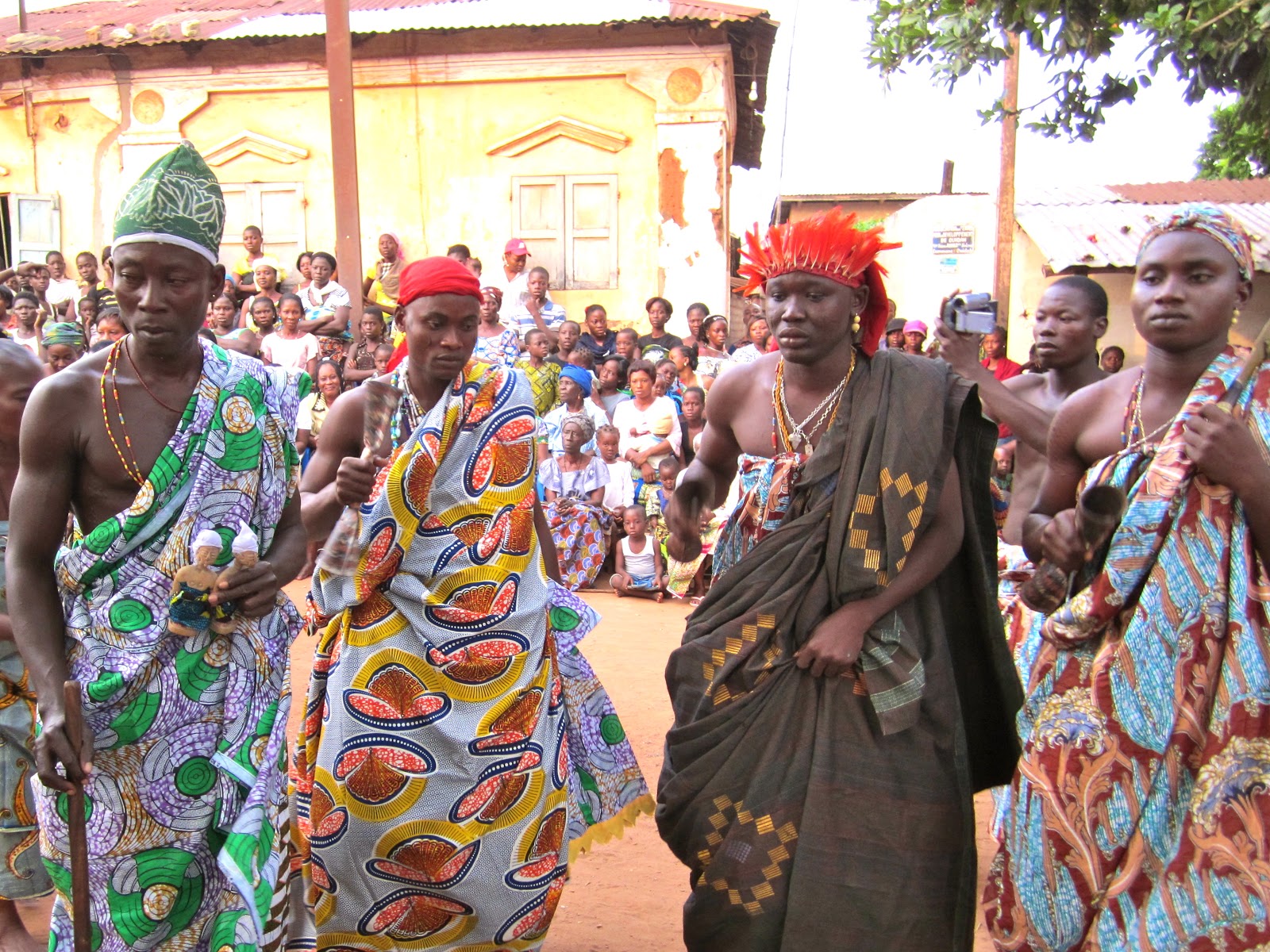 |
Le nouveau chef couvent avec les adeptes hommes – The new convent priest and his fellow followers. |
 |
Les femmes adeptes – Women followers |
Voyons la cérémonie de Vodun DOVO
Le Vodun DOVO est le dieu protecteur, dieu de défense et dieu des grands combats d’une partie de la communauté Fon d’Abomey installée à Ouidah autour des années 1750 après la conquête du royaume de Savi par le roi AGADJA d’Abomey vers les années 1727. Depuis des siècles, des générations se succèdent, vivifiant son culte, ses temples et sous le couvert d’un chef de couvent et du chef de famille. Ici, nous sommes dans l’aspect culturel, par ses danses et rythmes sacrés. C’est une musique codée, dont la percussion, les gongs, les chants, les accoutrements et les pas des danseurs signifient et répondent à une formule précise exigée par le Vodun DOVO. Vodun Dovo is the protector-god, god of defense, and the god of war that comes from the Fon community of Abomey. Its followers arrived in Ouidah around 1750 after the conquest of the kingdom of Savi by the Kind Agadja d’Abomey around 1727. Since that time, generations of faithful followed them, enlivening the cult and its temples, all under the leadership of the convent priest and the head of the family. Here, we experience its cultural manifestations in its sacred dance and rhythm. It is a coded music, in which the percussion, the bells, the songs, the clothing, and the steps of dancers all signify and respond to a formula precisely commanded by Vodun Dovo.
 |
Danse d’un adepte – A follower dancing |
Cérémonie de sortie de nouveaux adeptes de Vodun DOVO
Chaque Vodun dispose de son couvent, d’un chef couvent et ses collaborateurs du chef couvent. Voilà plus de 23ans que le chef couvent de Vodun DOVO et certains de ses collaborateurs étaient mort et depuis les postes étaient vacants. Les adeptes de Vodun DOVO et toute la population sont fiers de retrouver la réanimation culturelle de ce Vodun perdue il y a 23ans environs. La présente cérémonie est la fin d’une série d’initiation qui débouche sur l’installation d’un nouveau chef couvent. Every Vodun has its convent, its convent priest, and its assistants to the priest. It has been more than 23 years since the priest of Vodun Dovo died, and since then several other posts have also become vacant. The followers of Vodun Dovo and the community are excited to see this representation, lost for 23 years, present itself. This ceremony is at the end of a series of initiation ceremonies that ends with the installation of a new convent priest.
 |
Vodun Atchina Dovo |
Ce blog est une petite partie du Grand Vodun. Contactez-nous pour plus de connaissance sur le Vodun. This blog is a little piece of a big religion. Contact us for more information.
(229) 66 74 72 52
(229) 95 62 78 43 begin_of_the_skype_highlighting (229) 95 62 78 43 end_of_the_skype_highlighting
(229) 21 34 10 66 begin_of_the_skype_highlighting (229) 21 34 10 66 end_of_the_skype_highlighting
ciamobenin@gmail.com
(229) 95 62 78 43 begin_of_the_skype_highlighting (229) 95 62 78 43 end_of_the_skype_highlighting
(229) 21 34 10 66 begin_of_the_skype_highlighting (229) 21 34 10 66 end_of_the_skype_highlighting
ciamobenin@gmail.com
Vos dons soutiendront nos recherches et la promotion d’education artistique et culturelle au Benin. Your gifts support our research and the promotion of arts education and cultural education in Benin. Visit: http://www.crowdrise.com/ArtForceAfrica.
Subscribe to:
Posts (Atom)